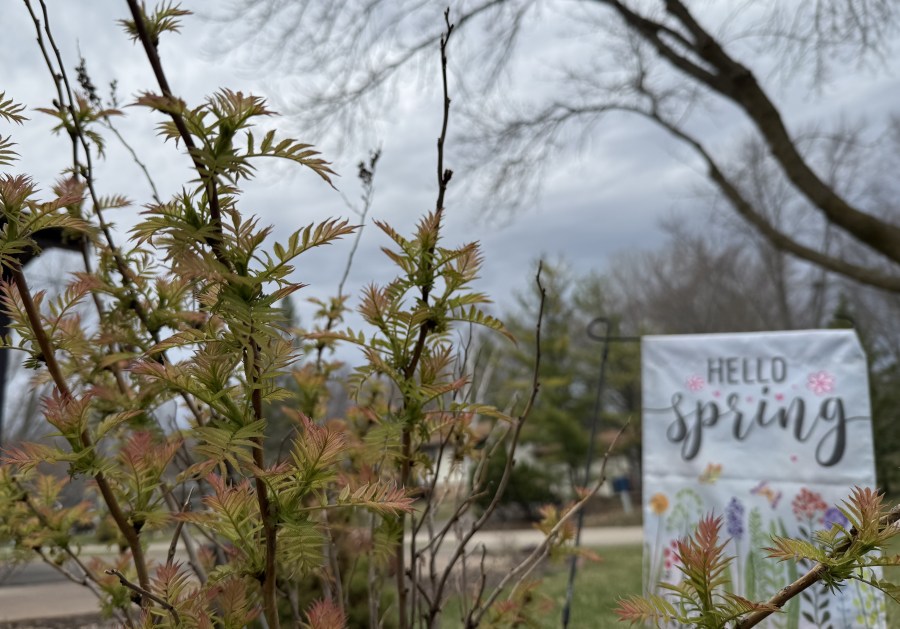
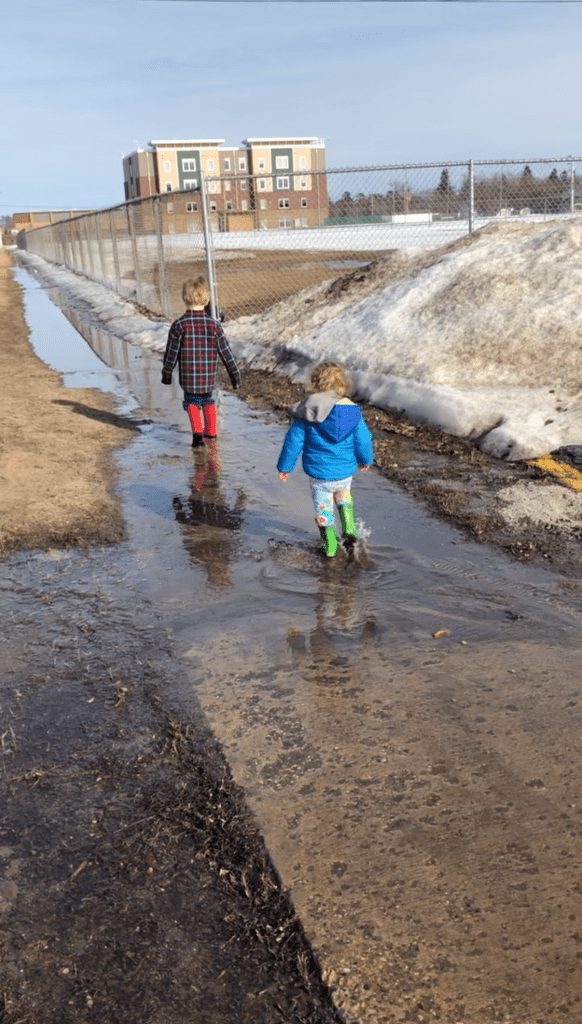
Several weeks ago, spring began its gradual, hesitant return to Minnesota. On a particularly warm day, the streets were filled with people walking dogs, parents pushing strollers, and kids riding bikes. It seemed as if the whole neighborhood was emerging from a long hibernation as we greeted one another with smiles, waves, and head nods, by way of expressing, “It’s been a while, nice to see you again!” During the winter months, the subzero temperatures, minimal daylight hours, and many contagious illnesses limit opportunities for everyday interactions. So, the renewed opportunity to simply walk outside, without needing to first bundle up to my eyeballs, and observe happy, brief interactions being exchanged between neighbors provided a deep sense of comfort to me. I felt an unexpected sense of hopeful expectation that things were going to be alright. It was as if every exchange I observed was part greeting and part reassurance that we were all going to be okay.
Later, as I reflected on the optimistic feeling of the day, I realized it was more than just the warm weather and brief hellos that felt encouraging. The kindness permeating the interactions provided an alternative to the narrative of division that seemed entrenched in every aspect of life. Especially over the course of the past few months, I had developed the habit of assuming that everyone around me was angry, as that seemed the prevailing mood portrayed in news stories and on social media. Additionally, I realized my own anxiety and anger had infused their influence into every part of my perspective on the world around me. It often felt that we were all on the verge of deeper division whenever dissenting or nuanced opinions were expressed, which led to a deep sense of hopelessness and worry that an impossible chasm was forming. Despite my best efforts at self-awareness, I had allowed my catastrophizing tendency to make me believe that every interaction carried with it the possibility for invoking hostility and that things were never going to get better.
My fear for worst scenarios isn’t completely the fault of the news or the current polarized political climate. This is a mindset I’ve struggled with for a long time. Even in everyday scenarios, I tend to catastrophize. For example, whenever I don’t hear from someone in a while or someone I’m expecting is late in arriving, I always assume the worst. I offended them with my last comment and that’s why I haven’t heard back. They had a terrible accident and that’s why they’re late. Why can I never assume the most likely? They’re busy and forgot to reply. They got caught in traffic and that’s why they haven’t arrived. In an attempt to fill the unknown, my brain is prone to create elaborate, hypothetical stories, rather than focus on the most likely scenarios that they are simply doing their best to keep up with the busy pace of life. I’m well aware how the typical schedule of just keeping up with the basics in everyday life can leave me feeling like I’ve forgotten something along the way, not to mention how the resulting exhaustion significantly impacts my propensity to catastrophize, which impacts my ability to thoughtfully engage with the world around me, which increases my anxiety for worst-case scenarios, which wears me out further. Phew! But I know I’m not alone in this cyclical struggle. As my eight year old thoughtfully reflected while I tucked her into bed the other night, “Happy thoughts require a lot more brain muscle power than sad thoughts. I always struggle with bad thoughts when I’m tired.” Goodness, this is very true. Maybe I just need to prioritize more sleep.
It struck me that my observations of the seemingly small interactions on that first warm day of this year offered an unexpected form of healing. Being able to walk out of my house without having to first add protective layers, both in the literal sense of warm clothes as well as the metaphorical of heavy personal boundaries, felt both vulnerable and freeing. The experience provided a much-needed reminder that while things are extremely divided, that’s just part of the story. The other part is that we’re all humans navigating life and that in spite of our incredibly vast differences we’re also similar in many ways. We live together in communities, work, learn, and play in the same places. We all have fears and struggles as well as hopes and dreams. Further, we can, and largely do, get along just fine with one another. We can, and do, help each other through some truly difficult times. But most surprising to me was realizing that even though the winter’s season of relative indoor solitude had provided a sense of insulation, a sort of shield and escape from some of the divisions permeating the local and national atmosphere, I had also missed out on the surprising healing that comes through just being a part of the world around me.
In my last post, I considered the invitation for humility and what incorporating this characteristic might look like in our lives. Similarly, life often presents us with an abundance of opportunities to practice kindness and compassion. I tell my kids often, which means I’m also reminding myself, that there is an abundance of anger and meanness in the world and that these are the easy reaction routes to take. The more challenging option, and one that provides an opportunity for renewal, is to choose to respond with kindness. Fundamentally I know this and yet I still struggle with it. As my kids will attest, I don’t always practice what I preach when a driver cuts me off in traffic. But in all seriousness, practicing kindness takes a lot of intentional effort and choice, way more work than responding in anger to the innumerable ways people, or often just life itself, interferes with our plans for a good day. I try to keep in mind a quote that has been attributed to Ian McLaren, the pen name for author and minister John Watson who lived in the 1800s, “Be kind, for everyone you meet is fighting a hard battle.” This feels like a gentle reset perspective as it certainly seems that everyone has been fighting a hard battle and could benefit from extending and receiving an abundance of kindness.

It’s been several weeks since that first warm spring day and yet the weather still continues to shift dramatically in temperature as winter apparently seems unwilling to let go just yet. In a way, the fluctuating temperatures remind me that while change is often inevitable, the pace varies greatly from imperceptibly subtle to immediately sudden. Some days the fear and division that grips our communities feels like a stubborn injury that just won’t heal. In those moments, I wish to return to the cold days of winter in order to disengage and hide out in my house away from it all. But then spring beckons me once again to focus on renewal and shared humanity, and I do my best to hold onto the optimistic feeling of connection that comes from being a part of the community. The shift in focus from fear of the unknown to hopeful expectation for the possible good is an experience similar to the process of ice melting after a long winter as both require a lot of time and patience during the change. Maybe that’s how we are renewed, too, gradually, hesitant but hopeful, keeping in mind that we’re all fighting hard battles, but, in kindness and compassion, reminding ourselves and those around us that we’re not alone, that it’s nice to see you again, that we are going to be okay.
Wendi is co-author of The Unexpected Ever Afters blog and enjoys sipping extra hot coffee, sharing a love of reading with her kids, and exploring bike trails.
photo credit: personal photos

